01Prompt
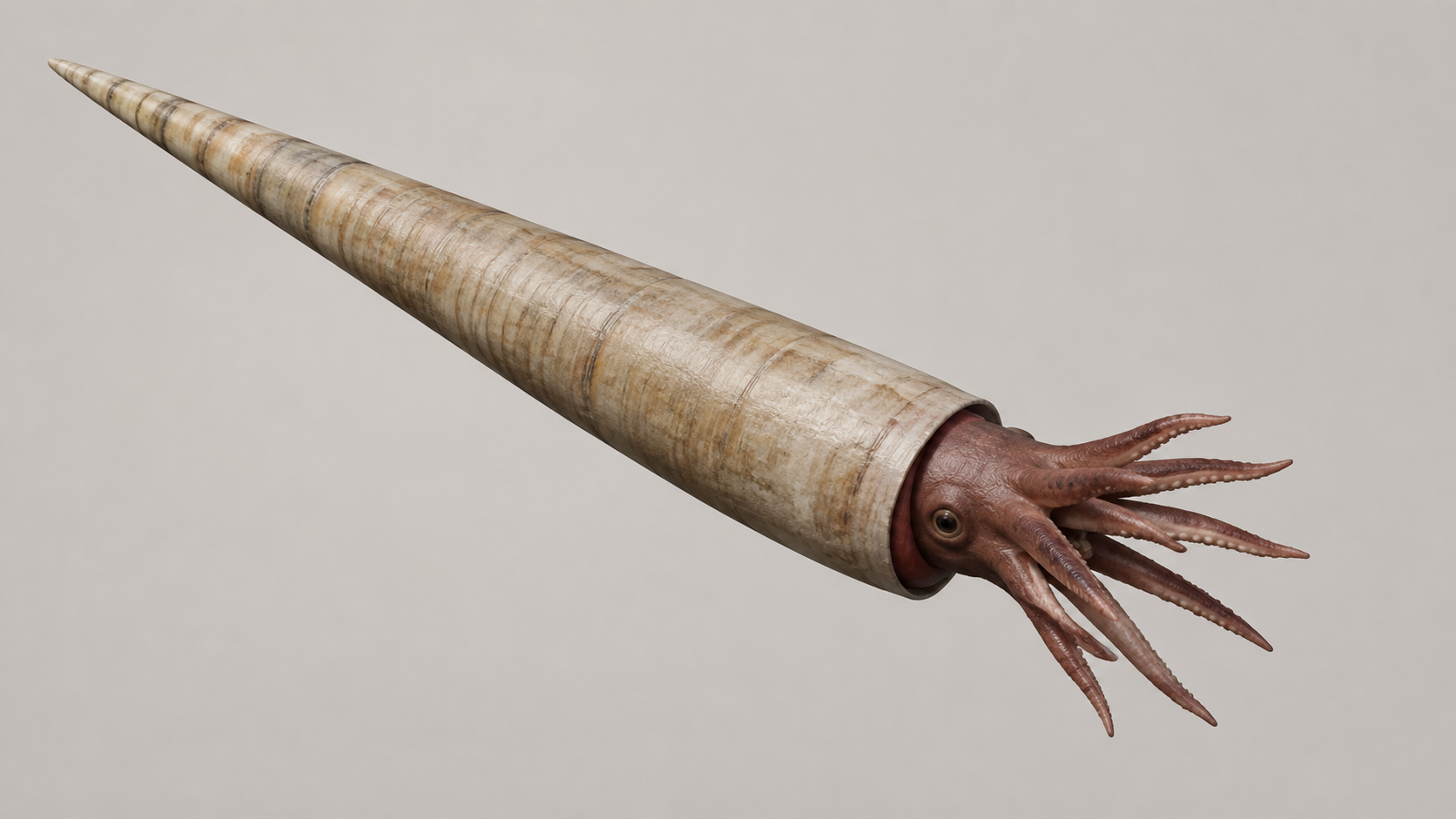
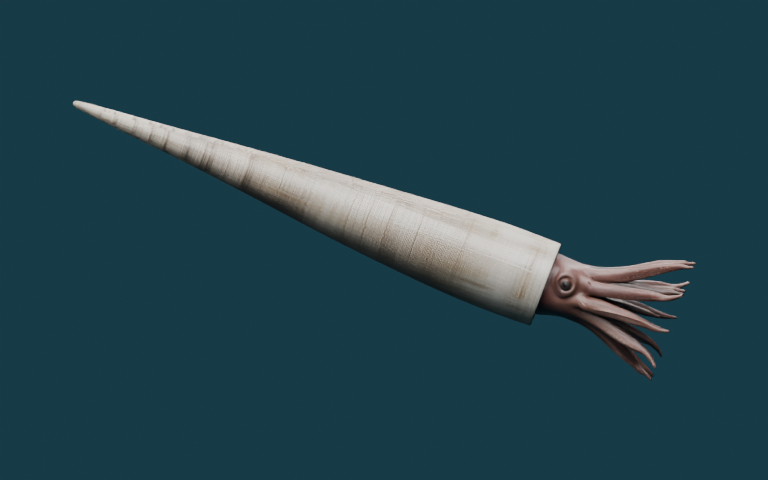
Cameroceras. A rigid, straight conical shell with a compact head and flexible arm crown. Slow swimming.
Full prompt
Use case: scientific-educational
Asset type: full-body paleoart reference for later image-to-3D and matched motion-capture visualization.
Primary request: Create exactly one scientifically informed realistic reconstruction of Cameroceras, an Ordovician straight-shelled endocerid cephalopod. Use a conservative soft-body reconstruction; exact soft parts and arm arrangement are unknown. In this image use EXACTLY EIGHT clearly separate short-to-moderate muscular arms. Eight arms is an explicit artistic reconstruction choice, not a known preserved arm count.
Scene/backdrop: plain pale warm-gray neutral studio background. Specimen suspended as an isolated scientific model; no floor contact or ground shadow needed. No underwater scene, water haze, bubbles, scenery or props.
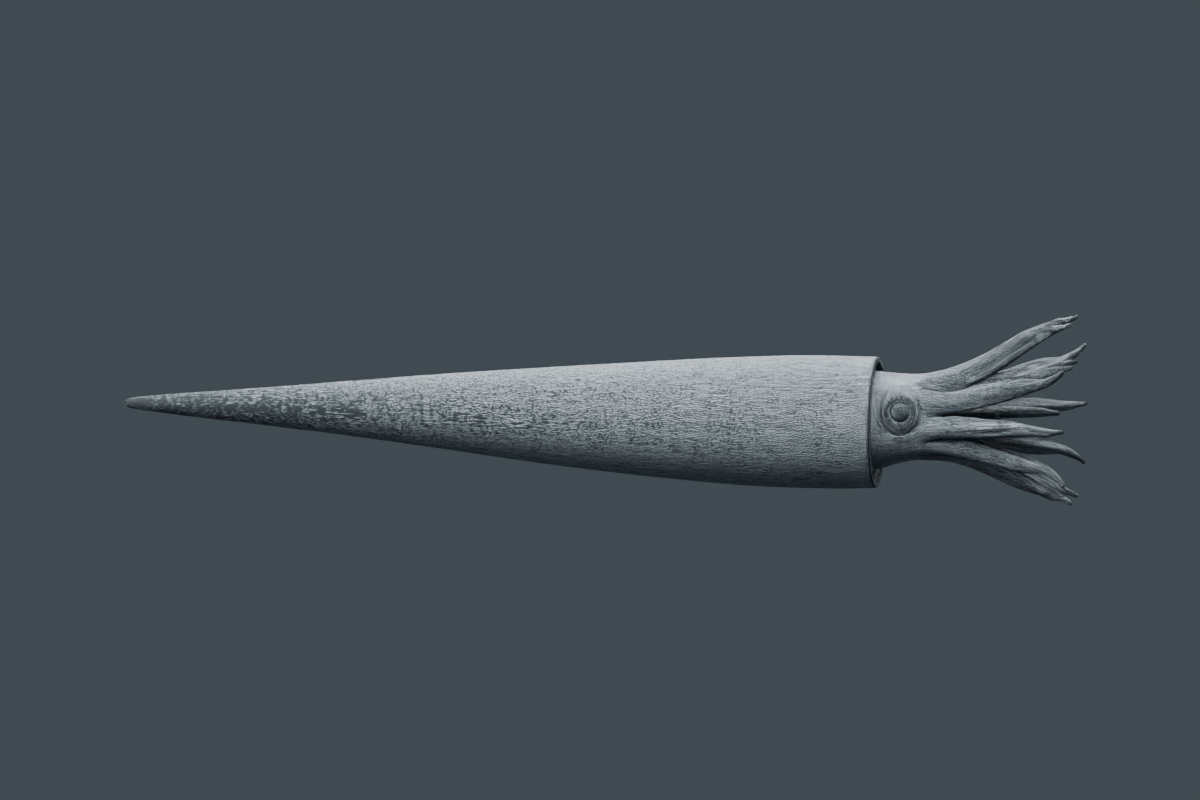
Subject/anatomy: one long rigid external conical chambered shell, narrow pointed apex at upper LEFT, gradually tapering, broad open living aperture at lower RIGHT. The shell remains a single intact continuous exterior, opaque and unbroken, with cream-brown subtle growth bands and restrained natural mottling. The exterior is smooth overall, no coarse ridges. No visible chambers or fossil cross-section. Shell length approximately 65 percent of total apex-to-arm-tip animal length. Shell is slender and long, not a fat short cone or coil. Its main axis tilts downward approximately 22 degrees toward the right. Only from the broad right aperture emerge a compact muted reddish-brown mantle, a modest soft head with small dark lateral eyes, and the arm crown. Keep the exposed head compact relative to the aperture; the cone is the shell containing its body, not an accessory behind an octopus body. Eight tapered fleshy arms surround the small central mouth at the front, gently and naturally splayed with clear negative gaps, distinct complete tips and no confusing overlap. Arms short-to-moderate and generally directed to the right; subtly stagger them in three dimensions so the eight appendages remain separately readable. Restrained fine organic soft-tissue texture, no enormous modern squid eyes. No two specialized elongated feeding tentacles.
Composition/framing: landscape 16:9, approximately 1600x900. Entire specimen uncropped with comfortable wide margins around the apex, aperture and every complete arm tip. Nearly exact side view facing RIGHT with a slight three-quarter angle that lets the separate arms around the mouth be seen. Shell apex high-left, broad aperture lower-right, arms extending rightward in a gentle open crown. Do not bend the shell. Clear silhouette suitable for a 3D mesh.
Style/medium: museum-quality realistic paleontological reconstruction, soft even studio light, detailed realistic surface rendering.
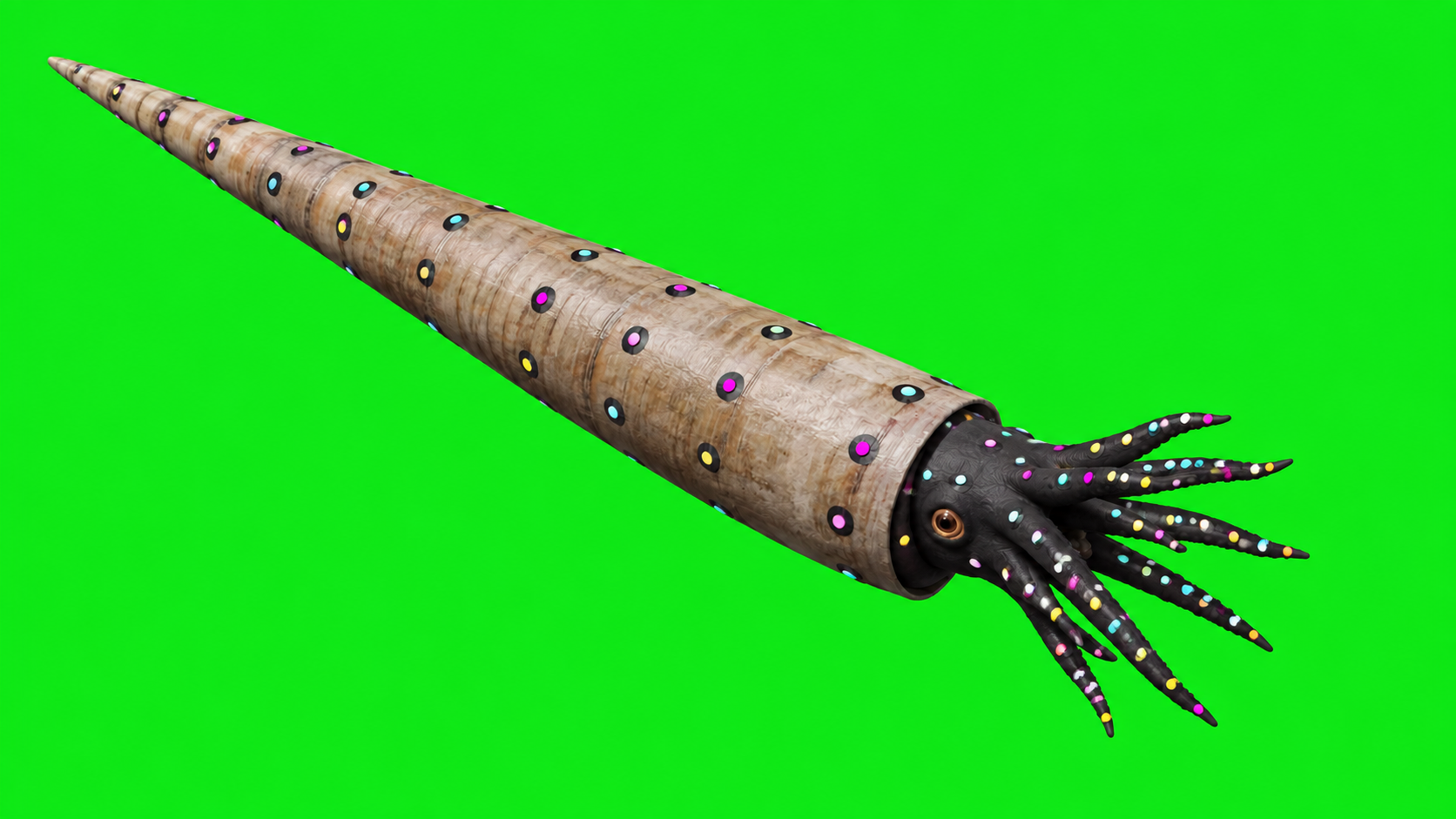
Constraints: one animal only. No costume or tracking markers yet. No text, labels, watermark, humans, scale bars, measurements or diagram overlays. The eight arms, surface coloration and 22-degree pose are reconstruction choices, not claims of a preserved exact appearance.
Avoid: octopus body replacing the shell, curled ammonite shell, giant squid feeding tentacles, fins or sail along the shell, legs, extra arms, merged arms, cropped tips, transparent shell, exposed chamber cutaway, fossil fragment, cartoon eye, decorative environment.
Reconstruction prompt · Used to generate the first image.