01Prompt
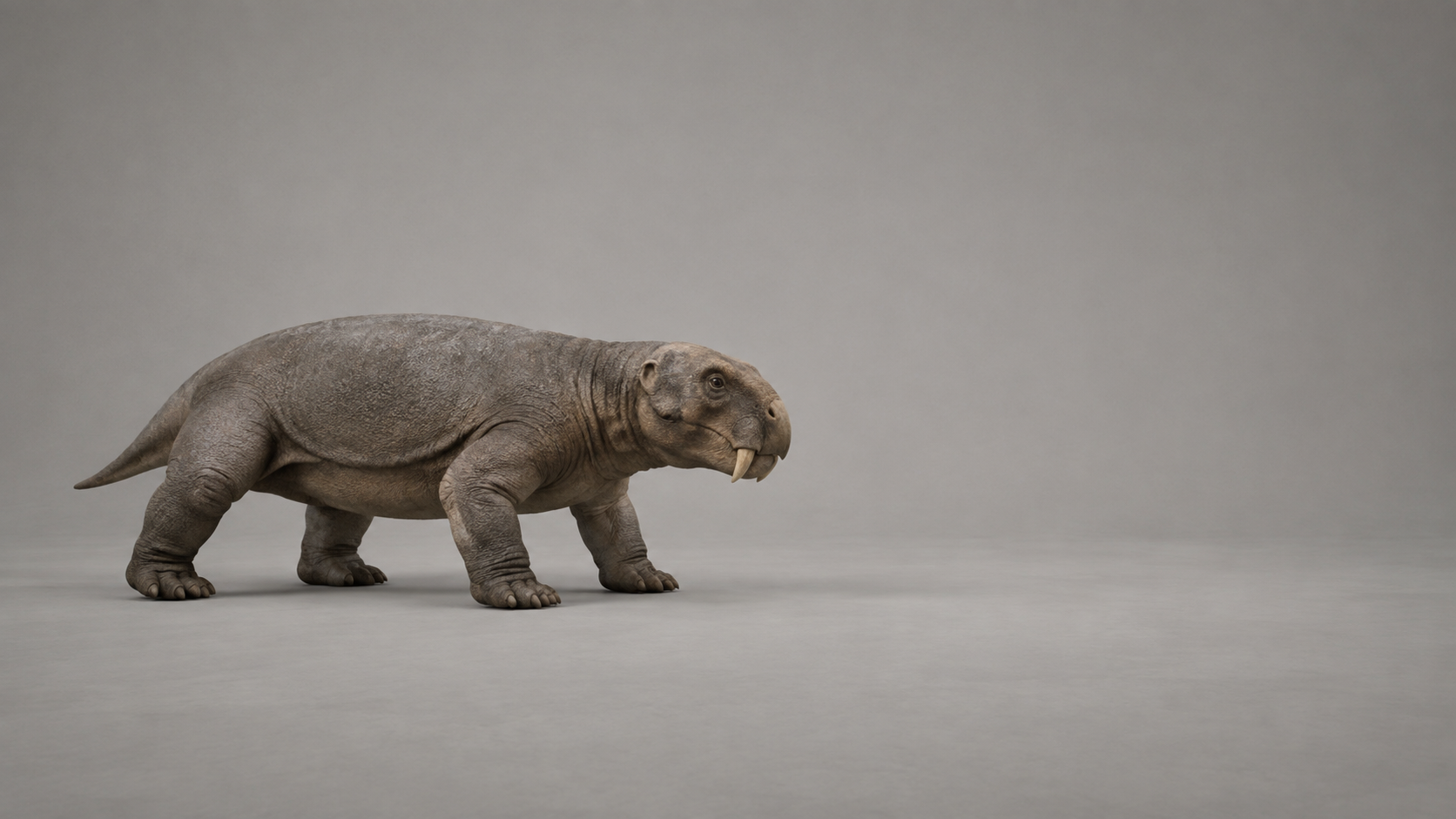
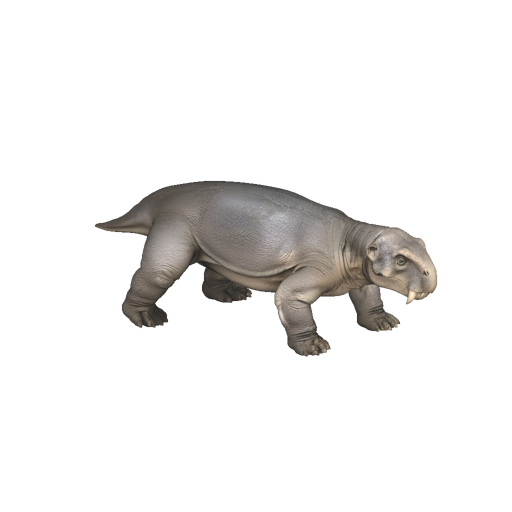
Create a single photorealistic, scientifically grounded paleoart reconstruction of a living Lystrosaurus murrayi, the Early Triassic dicynodont therapsid (a non-mammalian synapsid, not a dinosaur). This is the anatomy reference and opening frame for a later natural locomotion study, so prioritize believable species anatomy and readable feet over drama.
Full prompt
Use case: scientific-educational.
Create a single photorealistic, scientifically grounded paleoart reconstruction of a living Lystrosaurus murrayi, the Early Triassic dicynodont therapsid (a non-mammalian synapsid, not a dinosaur). This is the anatomy reference and opening frame for a later natural locomotion study, so prioritize believable species anatomy and readable feet over drama.

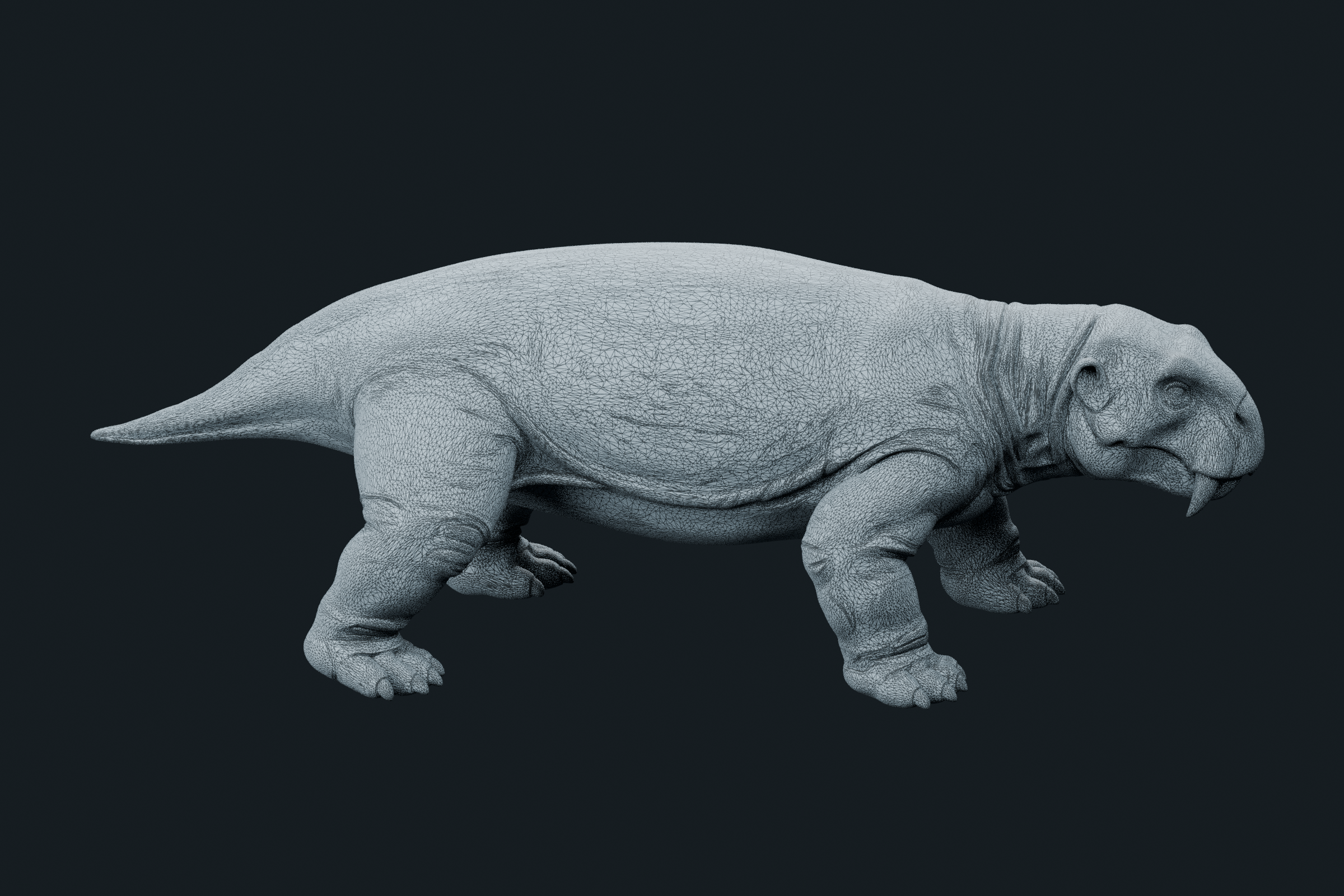
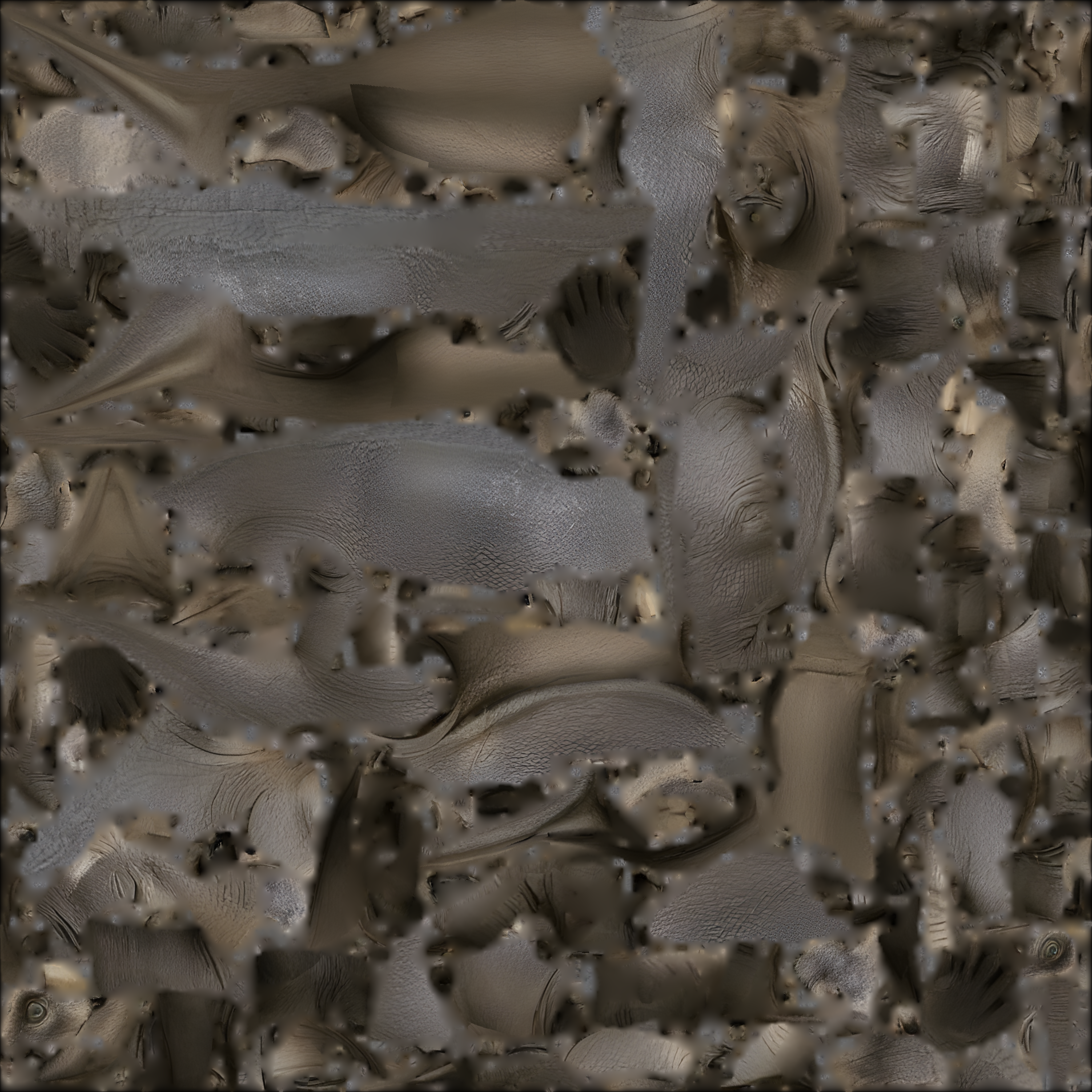
Subject anatomy: one healthy, well-fleshed, approximately one-metre-long individual with a squat barrel-shaped trunk, very short thick neck, proportionately large deep broad skull, short blunt downturned snout ending in a keratinous cropping beak, fleshy cheeks concealing the temporal skull openings, small laterally positioned eyes, and exactly two modest ivory tusks descending from the upper jaw, one on each side. The near tusk is fully visible; the far tusk is only visible where perspective permits. No other exposed teeth. A small inconspicuous ear opening, no external mammalian ear pinnae. Skin is hairless, muted earthy grey-brown, finely pebbled and dimpled with subtle wrinkles at the joints, not crocodilian armour and not exposed skull contours. Skin texture is informed by fossilized integument; the subdued color is a conservative artistic reconstruction.
Four short, powerful limbs. Forelimbs particularly robust with outward-set elbows and a modest semi-sprawling stance; hindlimbs somewhat more under the trunk but flexed, never a fully upright modern pig or dog stance. Broad grounded five-digit feet with short blunt digging claws, not hooves. Belly carried clear of the floor. Short tapering tail held low and visible behind the rump. No horns, crest, sail, mane, dorsal spikes, fur, feathers or reptilian scutes.

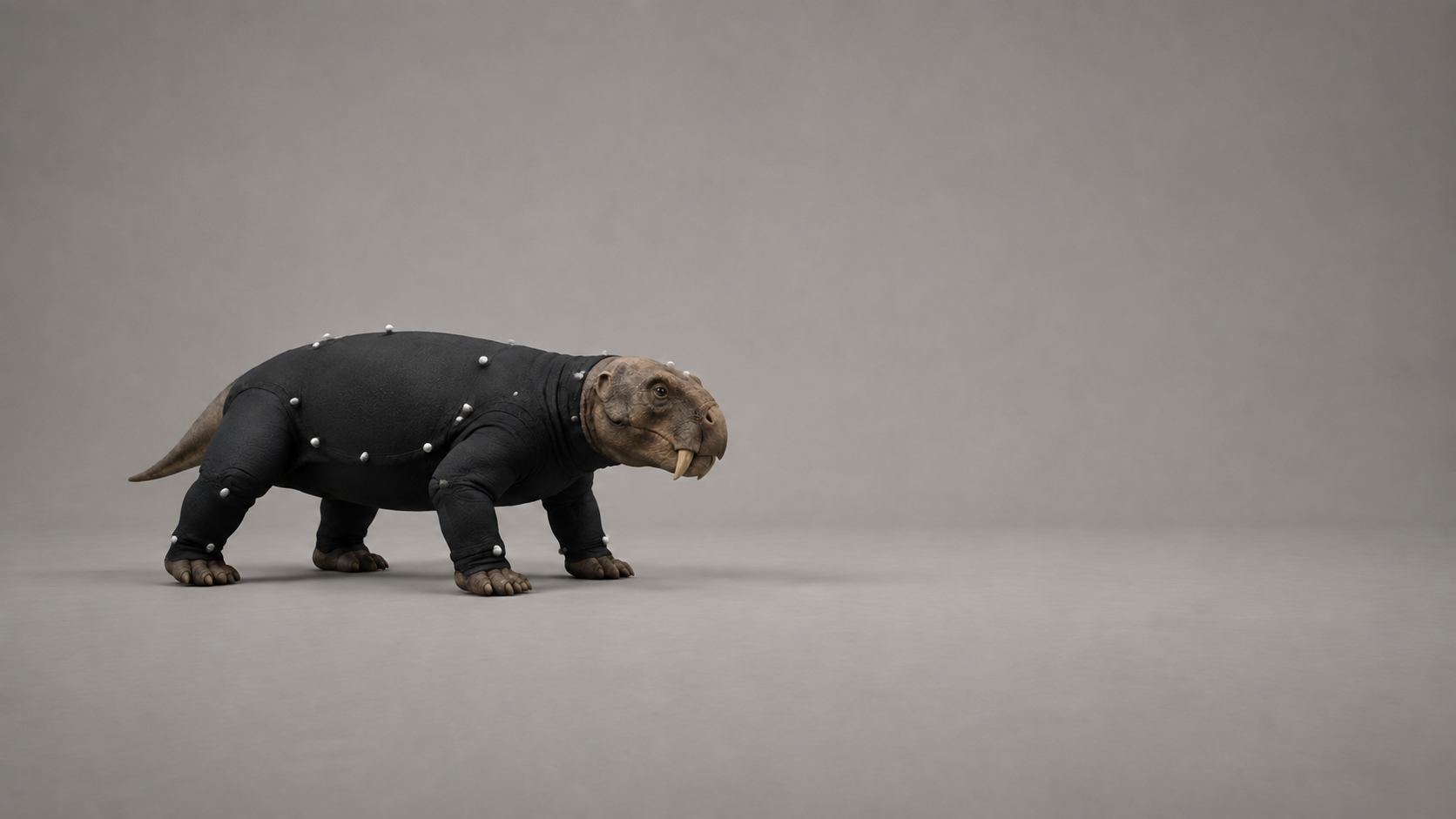
Scene and framing: clean pale neutral-grey cyclorama and matte level studio floor, a believable animal reconstruction photographed at body height, soft broad diffuse lighting and a clear soft contact shadow beneath the feet. Wide 16:9 landscape. Camera fixed, lateral side profile with only a very slight three-quarter offset (about 8 degrees) so all four legs can be distinguished. Animal faces RIGHT, entire body and every extremity in frame, occupies approximately 32 percent of image width, and stands in the LEFT third with substantial empty floor to the right for walking across the screen. Full frame, no inset, no diagram, no labels, no text, no humans, no equipment, no suit yet.
Pose: relaxed natural walking-ready stance, all four feet visibly grounded at subtly staggered positions, weight distributed convincingly, head in line with shoulders. Adult-animal proportions and lifelike tissue volume. Maintain anatomy rather than making it cute or monstrous. Museum-quality realism, crisp natural textures, no cinematic shallow focus hiding the legs.
Reconstruction prompt · Written to specify anatomy, pose and framing for OpenAI ImageGen.